Showing posts with label fear. Show all posts

Monday, July 8, 2019

Thoughts on Calling Myself an Idiot


The other day, I finished a solitary hike on a sweltering summer afternoon and came upon a couple of coworkers. As I was peeling off my gear, I felt compelled to comment that I had worn my work nametag to give me “an excuse for looking like such an idiot”. I motioned to my big hat, worn clothes, hand lens, and binoculars. My sweat-soaked pack was still on my back.

I was met with looks of confusion. One’s reply was to assure me that I did not at all look like an idiot.

Their reactions gave me pause. Why did I say that? What point was I making about myself? Later, I looked up the word and its synonyms to try to understand:

Idiot. Fool. Clown. Loon.

Nerd was on the list, too. I’ve said before that I’m proud to be a nerd. But it was the above chain of words that spoke to me in a coldly true way. When I said it, I was wearing functional clothes and carrying field tools at a 400+ acre nature park. Why was I so “foolish” from my perspective?

After looking at that list of words, it hit me. All of these words paint a picture of someone who “everybody else” is staring at as being excessively silly- or worse. Why would I feel that? For decades, I’ve been like what Shakespeare wrote of in Macbeth: a poor player upon a stage, fretting. Alone. That’s the big key. 

I have walked through this life very much on the edges. Pretending I’m fine.


I grew up fairly isolated. My pastimes were solitary: reading, drawing, thinking. I made friends, but just a few. I tried to blend into the background and please the adults. If I felt a streak of rebellion upon occasion, I recall fits of frustration and anger and a public display or two, but for the most part, I kept it all hidden and on the inside.

Sometimes I wonder if I absorbed that grade school mantra “you can be anything you want to be...if you try” in a really unhealthy way. Real growth is achieved by networks of people supporting and challenging you in productive ways. You've defeated yourself before you've even tried if you think you have to do something perfectly or not at all...and if you have few people around showing you that there’s always a process, that everyone makes mistakes, and perhaps there are ingenious tricks to achieve one’s goals. They give you hope to go on trying.

I did receive one bit of advice before college that I reaped huge benefits from. Someone told me to introduce myself to the professors in my chosen major as soon as classes started and ask them for a job. Get your face in front of them, they said. Ridiculously enough, I don’t recall who gave me that advice. I wish I did because I would thank them for that seed that grew and grew over the intervening years.

"Get your face in front of them." The best and hardest advice.


I was super excited to purchase steel-toed boots and waders for my first environmental job after I graduated. I tried so hard. I bought tons of books. I worked countless unpaid hours at home, trying to become something: a botanist. But I had no real mentors. No one had my professional back to walk me through the challenges. At the first office Christmas party I attended, a company leader didn’t applaud my efforts. He said to my husband (we’d been married 7 months), “Now I can see why you married her!”. I was wearing a dress. I failed to process things like that in a constructive way.

What I am and what I should be. It’s been a lifetime battle.


I’m not alone in that, I know. Others have fewer resources to rely on and way more critical eyes. Now I see that. Being and becoming: it’s part of the trip. That’s a tough thing to sell to someone who deeply believed they had to be “good” and to whom the social definitions of “good” didn’t make much sense.

I’ve written quite a bit on how I have felt myself evolving out of that illusion. But clearly, I still need a lot to practice if I’m still calling myself names. In the last 15 years, I’ve met some amazing mentors who have helped me see today more clearly, look back with different eyes and look ahead with better lenses. Old and learned habits die hard, though. New wounds lead to setbacks. I still have to keep pushing myself to participate in the bigger picture, away from the “safety” of the edges.

Clearly, I haven’t fully accepted that I have found a place and community of others to drop those feelings of separation and to really be the “me” I’ve dreamed of. I can do this. I can be this. With others. A whole bunch of others. I need them and they need me.

 Others need me. That’s a foreign concept to me.


From that truth, I am compelled to consider the multitudes on the edges- those feeling dangerously out on those edges because they’ve been pushed there. They exist on the fringes where they fear for their lives. I need to ask myself what can I do to help them draw closer? What can I do to help others feel safe enough to be closer? To understand that they deserve to be closer? I hope to do what I can in the coming years to begin answering these questions with actions. Writing and posting this is a start.

I firmly believe we are all stronger together. Everyone needs to feel supportive connections beyond self and to experience the benefits of being, working, and living together. Everyone.

No one should see themselves as an idiot, a fool, a clown, or a lone loon.


Sunday, June 30, 2019

Slow and Quiet


 Who has time for quiet?
Who has time to slow down?

Many people have studied the dangers and pitfalls of basing one’s life and one’s decisions on fear. I agree with this idea. We need and use “fear” to keep us safe from harm. However, it can be a dangerously strong emotion and can become a serious mental disorder that needs professional support- I’m not writing in that capacity. I’m writing because I’m grappling with another idea that I think may help us to not be swayed by Fear’s allure for a quick and protective response.

Slow down and be quiet.

Without any of the term’s baggage, that’s what is at the heart of “mindfulness practice”. I’ve written many pieces over the years on rhythm and stillness. Breathing, seasons, waves on water, sunrise and sunset: there are examples all around of us of things that occur at certain natural speeds and times.

Where do patterns, fear, mindfulness, quiet, rhythm, and slowing down intersect?

Allow me to bring in yet another human concept: vacation. We take vacations to break away from our normal patterns of life. We willingly throw some chaos into our living to experience an unfamiliar rush. Even if that “rush” is to end up sitting by a pool or natural water body. It’s different from our “normal”. We crave a change, and in fact, everything is changing. It’s all in motion.

Motion. Nothing is locked in place.


 I’ve tried to draw out my thoughts. (I didn’t label the X-axis as time, because I just attempted to read Carlo Rovelli’s The Order of Time and my one takeaway (other than an appreciation for his lyrical style) was that time is not linear.) The red line is a hectic experience of living that can lead one to ask the two questions I posed at the beginning of this piece. What happens when we experience an unexpected, loud sound? We jump. Our hearts race, like the red line on my graph leaping wildly and picking up speed like an EKG. The same reaction happens when we feel pressured at work, when we can’t pay the bills, when we feel alienated from others, or when we feel threatened by someone we perceive as suspicious.

A little bit of chaos and fear is beneficial- it can protect us from legitimate threats, feel good, or inspire us. However, those oscillations can get so wild, we can begin feeling like flotsam on an angry sea- completely adrift and without any control. Those are perfect conditions for massive growth in experiencing fear, founded or not.

The causes of chaotic living, that red line, are many. Some are from our personal choices. Some stem from the choices of others. Others are physiological. We’ll never get rid of them all, but we can decide to try to moderate that chaos through individual and group effort. In addition, we have many green patterns both in the world around us and within us to use as metronomes.

Life’s patterns can feel boring, but they are the vital buffers everything hangs upon.

We can return to these patterns and gain comfort from them- if we so choose. The red patterns can blot the green ones from our view, but that does not mean the green ones cease to exist. And thus, I return to my initial questions:

Who has time for quiet?
Who has time to slow down?

To me, the answer is: everyone must.


Friday, February 16, 2018

Fear and Ice


Sometimes, overwhelming waves of emotions engulf me.

They take my breath away with their power. I feel helpless and naked in their presence. It hurts. It burns. Sometimes, it feels like they could kill me, these emotions.

How to respond?

I consider that question, as I sit in the glaring winter sun. There’s a long icicle outside my window. It’s gleaming in that sun’s rays. Hard and clear, it’s locked- literally frozen in time and space. It looks so strong and proud- so sure in its place.

I start to envy it. Cold. Solid. Lucid. Everything just goes right through it without a care. Without any involvement. No response.

I step back- consider a bigger picture. Life’s a mix of what’s there and what we hope and fear. If I freeze into a block of ice, I might manage. However, that won’t erase what’s around me.

Elisabeth Kübler-Ross was a psychiatrist who studied death and wrote the book On Death and Dying. She jumped into life and made some great contributions to the world (we need even more thoughts that what she provided on death and dying) and also became involved in some big mistakes (at one point she was scammed by a spiritualist).

I’ve written previously about the need for us all to embrace failure as part of life, in I Heart Failure. I add all this all to my thoughts on fearful levels of emotions. I want to hide when I’m afraid I can’t handle it. I want everything to stop and freeze when I’m thinking I’m not strong enough.

That ice is beautiful, but it’s solidity is a false front. That sun will win, eventually. Nothing is truly alone.

We’d be best to accept the sun, as well. Life and people are most beautiful when left to do and be. To mix in wild combinations. To try and fail. To try again. To not attempt to hide and be alone.

Beautiful people don’t just happen.
Beautiful things don’t just happen.

They both take interaction. Give and take. And time.

May we all have the strength to allow that and see it through.


Saturday, January 20, 2018

On The Shore of What Is and What Could Be


Brian Crosby’s photographs inspired me again this week, this time on the ageless beauty of the sea and shore. His image at Whitehaven in Cambria spoke of a balance that I wanted to explore. While not revolutionary, I felt it worthy to be considered again. I do try to apply a unique KPop hook at the end, so I hope you’ll stay with me.

Life’s a dance about what we have and are and what we could have or could become:  What Is and What Could Be.

I see our schools are one place where What Is and What Could Be come together on a regular basis. Not the only place, but a consistent one.

What Is

We’re all a part of What Is. Adults and children: every single human alive today. Our kids are living and breathing What Is. Sometimes it’s privilege, comfortable and sure- one’s life is spread out and the way is fairly clear to see. Many times, it’s not. What Is is messy. It’s good times and things, but it’s also stress, poverty, abuse and job loss or underemployment. It’s differing abilities, preferences and creeds. It’s unexpected calamities. More and more, It’s us against them. It’s fear and anger. It’s blaming someone else. Our teachers experience What Is not only in their own lives- their days are spent soaked in the What Is of hundreds of people. Day in. Day out.

In the midst of What Is, our schools seek to guide young minds to the the concept of something of fluid (and some feel, scary) power: What Could Be.

What Could Be

Today, teachers have technologies and pedagogies (the fancy word for “ways of teaching”) that could lead to amazing advancements in the world. They have ways to guide minds to operate together, debate constructively and to be open to trying and failing and trying again.  They have access to worldwide sources of information on today’s cutting-edge discovers and research and for their students to share their own findings near and far. I doubt I’m too far off when I say that teachers today seek to form people who will lead the world- a world they hope will include their students warmly and allow them to contribute meaningfully.

They do, at least, when not so beaten by What Is that they lose sight of the promise of What Could Be.

What Could Be is fluid, as I said before. I picture it as the ocean and What Is as a rocky island. What Could Be is all the stuff that we wonder and dream about. It’s bits of what we know and splashes of novel things sloshing around with potential, but no real form yet.  It’s neither good nor bad, and What Could Be washes constantly on the shore of What Is, eroding and depositing, molding it over time.

Natural Progression Unless...

That is, if What Is allows it to. What Is can build barriers against What Could Be. These barriers can be laws that select for the status quo. They can be the withholding of information to or access to resources for certain people. They can be the silencing or defamation of contrary voices. These barriers can even be as simple as plain unknowing ignorance, disinterest and/or stubbornness by enough people to slam the brakes on the hopes and dreams of others seeking What Could Be.

To be open to the potential of What Could Be, we have to have hope that things can get better than What Is. We have to be willing to take risks with What Is and practice with new ideas and ways. We need to be willing to help each other and to risk failure. We have to be willing to stand back up and try again when we do fail, because we always will face calamities.

That last paragraph? That’s what you learn in school. That’s what we should practice regularly in our jobs and personal lives, too. All of us.

The ebb and flow of a seashore is a reminder to us all of the amazing and exciting dance we face if we’re willing: What Is and What Could Be. As Block B asks in their 2017 hit, Shall We Dance:

“I don’t want to be locked up
Gather the crowds, let’s break the taboo
We need to spread out
Or else we might become scarecrows
We can make empty lots into royal spaces
This is the peak, don’t exit out now
To the left, to the right, rock all night

Gather in a circle
Hesitant people won’t get in
Turn on the music and don’t give a care
Ya’ll just vibe with me, baby
I like that person over there
Pop it up, burn it up, more and more
Hey you guys, wanna play?
Don’t just watch, join us

Shall we dance…?”


Yes, we should.

Sunday, January 7, 2018

Who's Afraid of Who? 4 Thoughts on Fear


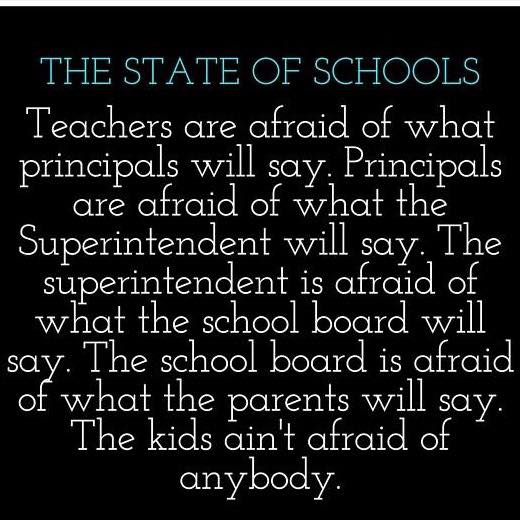
A friend posted this memory on Facebook and I thought it has some universal connections worth exploring.

We all live in a network with others.
This quote depicts a chain of connection:teacher→principal→superintendent→school board→parents. It implies that parents control everything and everyone within that chain because it flows in one direction. However, we ALL live in multi-directional relationship with each other, and those relationships form webs, similar to this visual.

Agreeing that parents are a huge influence in this chain, they are only a part of a larger web. Parents, teachers, administrators and principals are community members and whether we see it or not, ALL community members have an interest and role in what goes on in our schools (and in all our other communal endeavors). Our communal work guides what we have now and what we and our children will have in the future. All members should have an understanding of and involvement in their community abilities, goals and needs.

Being driven by fear is real but is not the only option.
While there’s some error in the visual’s message on one-direction flow of behaviors, it nailed the mark on how our responses to others can be guided by fear. Every single person alive today has experienced fear and its influence. Fear of getting fat stops us from eating a whole pie. Fear of alienating a spouse stops us from snapping viciously when we are frustrated.

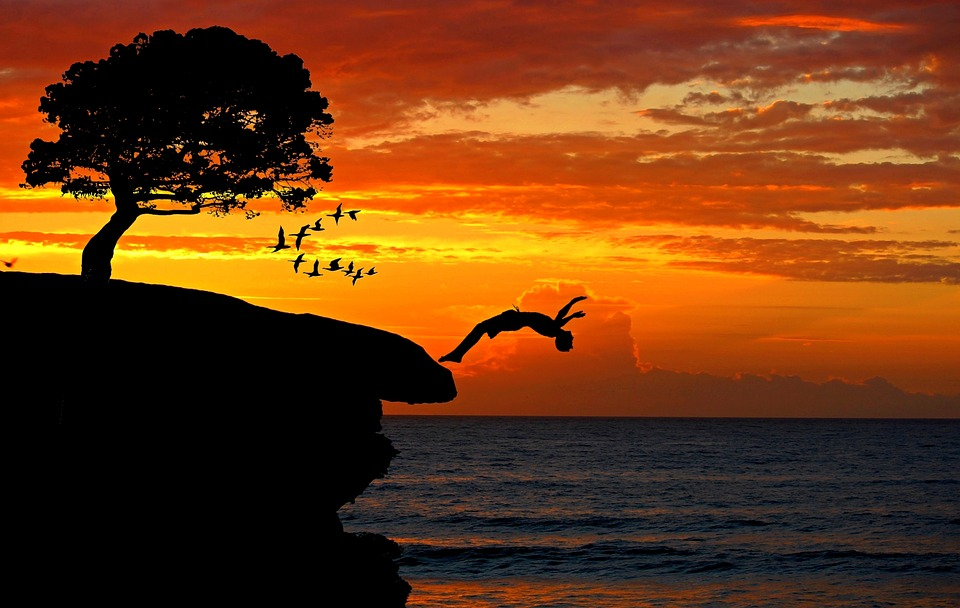
However, while we all feel fear, we do not need to be controlled by it. As Mark Twain said, “Courage is resistance to fear, mastery of fear, not absence of fear.”. If we can step through our fear (or jump, as this picture represents), we can have the opportunity for more and feel the thrill of accomplishing what we thought was impossible.

Fear = distrust.

When I first read this post, I immediately wanted to reply that it’s not that the kids aren’t afraid of anyone, they just don't trust anyone. All the parenting books agree that kids want and deserve an understandable structure to live within. Children’s Hospital Colorado outlines The Top 8 Things Every Kid Needs and the top 3 are:

  • Security
  • Stability
  • Consistency
When children don’t get these things regularly, a very understandable response is to put up walls. They want to protect themselves using what means they have before them.

Kids aren’t blind to reality. Whether it’s on their own street, online or in the news, they see the disconnects between the links in their webs. When we, their community, are all splitting up Us vs Them or Right vs Wrong in the vast number of horrible ways we do, they can't make sense of it or find a consistent response they can successfully fall back on.

It doesn’t have to be this way.

There are teachers whose reality fits that first visual, both in the US and well beyond its borders. From my experiences and in my reading, I’ve discovered places suffering within this type of fear-based environment and others where people are living as vital nodes within their overall community’s web.

We can ALL work toward a better reality. We probably will never get it right 100%. New trials and tribulations will always arise. However, we can get to a better place by trying together.

What are your personal truths? Who can you reach out to and help? Where can you go for support? When do you feel the deepest sense of community? What could you do to step beyond those zones?

Best wishes to you as we step a bit less fearfully forward into tomorrow!

Thursday, November 9, 2017

Not Fun and Games

not_fun_and_games.jpg
My husband was playing a quick round of Clash Royale this morning. He’s a serious gamer, but his face folded into even deeper creases than usual as he tapped the screen. Then he growled, “I’m playing against someone who’s screen name is a Nazi’s name.”

I confess that I’m paraphrasing him. He said the name, along with some colorful adjectives. We both knew the name. We knew the name was intentionally chosen. I choose not to put it down in print yet again.

I’ve written before about the importance and weight our words have, in The Word Soup We’re Living In.  I also went into the concept of constructive or destructive words back in January, with Are We Cultivators or Killers. That piece, in retrospect, is child-like in the examples I shared of destructive words. I think the overall validity of its message remains true, however.

Where we let our minds linger affects us all.

All too often, we hear excuses such as, “I was just joking.” or “I didn’t do anything.”. In this world with more information at our fingertips than ever before, we also repeatedly hear “I didn’t know.” and “It wasn’t *that* bad.”. There is a real or perceived disconnect between self, one’s actions and others.

Excuses. Feigned Ignorance. Self-Preservation. Anger. Fear.

It doesn’t matter which one it is, we have to stop. It’s possible to change and imperative to do so. I’m still a firm believer in the potential good that each individual human can cultivate, despite the vast array of examples on the opposite side of the spectrum. I believe our potential altitude goes both positive or negative: for however far down someone falls, I bet there’s someone somewhere doing something that much better than was done before.

Positive messages are out there.

Organizations such as Playworks bring inclusive play and social skill development to playgrounds and schools. Restorative justice systems exist that bring victims and their offenders together for real healing and growth. Grist magazine publishes a list of 50 Fixers who are putting their skills and passions in building better ways around the world. Musicians are stepping up to improve the lives of diabetics (Nick Jonas’s BeyondType1) and children worldwide (BTS’s campaign Love-myself.org with UNICEF).

We all can participate. Every time someone helps a neighbor or volunteers at a school- no matter how insignificant it may seem- they are exemplifying the idea of constructive living.

Constructive lives don’t have space for destructive ideas and ways.

Teachers around the world are working hard to create environments that offer opportunities for personal growth for their students. Increasingly, there are pushes for students to create products during their learning that can be offered to their world at large. Whether large scale like Design Learning's problem-solving competitions, or in more homegrown projects, I believe we need much more of this. We need to embrace this as an expectation of our youth: you try and you give. Don’t do something for grades. Do something to help and connect.

When youth connect with their communities and our communities see the talents and energy our youth can provide the whole, real change and improvement can occur. We can teach each other. We can learn from each other. Working together, we’ll have far less time and temptation to “joke” about (or, let’s face it, not joke, and emulate) such horrifying people and times as was exemplified by the Nazis and the other groups who seek to divide and belittle the “other” to this day.

The more purpose we feel, the more optimistic we feel. With optimism, dark times & people will lose their appeal and they will go back to what they should be: painfully acquired lessons on what NOT to do and be.

Wednesday, August 23, 2017

A Walk. A Talk.


I had to go for a nature walk last night. It was a compulsion: as if something was insisting. Nudging me, repeatedly.


I listened.


The late summer sun was sinking toward the horizon as I climbed the hill. The trail alternated between the dry crunch of grit and gravel and the spongy slap of clover and plantain leaves against my soles. I slowly became aware of other sensations: the mercurial winds teasing my hair, the dancing tallgrass rustling to its beat, the random chirp of crow and cricket.


I relaxed.


I descended the hill, bouncing down the uneven terrain. With a flash of white tail, a rabbit bolted from the trailside brush. I had disturbed its evening meal.


I dropped further, entering the fen. In the darkening gloom, I plunged into another world of wet richness: thick scents of walnut forest, black soil and wetland marsh. Mosquitoes danced about in this isolated space.


I marched on.


There’s a rustic observation deck overlooking the fen. As the sun hovered just over the horizon, I climbed and sat on its weathered boards. They were both warm and splintery. A ground bee buzzed around my knee and landed for a moment.


I breathed.


The voice of doom that I’d begun to turn away from began speaking to me again as I sat. That voice turns wishes to things that will never be, ideas to silly aspirations, and dreams to foolish pipedreams.


I sighed.


I gave myself my talk. This time of the year is one of transition. Summer’s ripeness is coming to a close. The fields are nearing harvest. Sunrise and sunset are both inching toward each other, lengthening the night. I’m here in this time and space, one of 7 billion others with similar concerns and many with fewer resources than what are available to me. I should be grateful. And hopeful. And acting.


I stood.


I raised my arms up above my head, reminding myself we’re all under the same sky. I bent forward and touched my toes, reminding myself I’m safe, grounded and where I should be. I turned my face to the wind, reminding myself to breathe in hope and breathe out my worries. I heard a nearby spring gurgling, reminding myself that action can wash away pain and fear.


It was time to go. The sun had set and darkness was falling. I made my way back to my car as the rush of daytime began to fall into the necessary and restoring quiet of night. One repetition of that cycle was coming to a close. Another was just around the corner.

I smiled.


Thursday, May 4, 2017

Nothing New. Just Growth

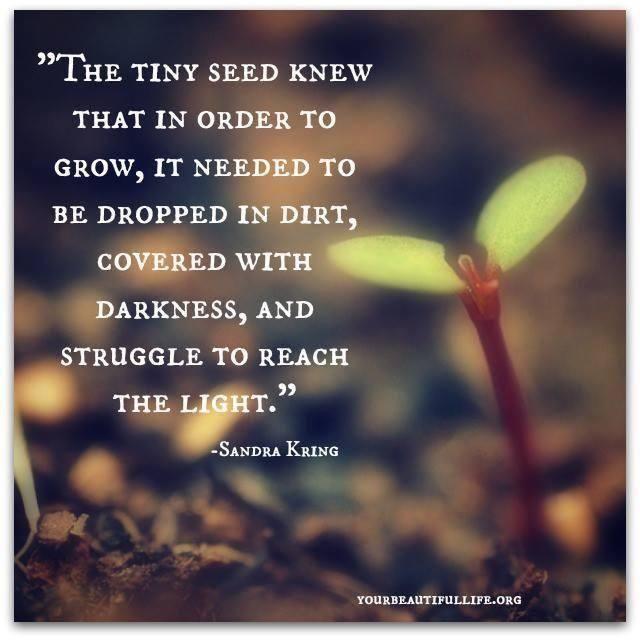
seedquote.jpgI used to be afraid of speaking up because I thought I had nothing new to offer.

I destroyed countless pages and tossed aside numerous half-formed stories because I lost hope in their worth and in mine to make them whole.

We all sit on this rock together- over 7 billion of us. Thinking. Laughing. Crying. Struggling. Winning. Working. Loving. Dealing. Losing. The odds that I’d come up with something completely unique in all that are miniscule. And you know what? That’s totally fine.

It’s fine because we build on each other's work.

Yes, there still are big names today that leap out like the great masters of previous eras. We still have the opportunity to be in awe of someone’s outstanding artistry or extraordinary mental acuity.

However, when you look at their works and ideas, there are some common threads. Physicist Dr. Carlo Rovelli talks of interaction being the root of all things physicists study today. Philosophers like The Dalai Lama talk of the overwhelming importance of connections between peoples, faiths and science. Meanwhile, experts in education are defining the successful educational environment as one where the students immerse themselves in subjects, pulling together multiple disciplines, mechanisms and perspectives with the sharing of learning and discussions among peers (& beyond) a crucial part of the process.

Everyone comes from a certain perspective, but patterns of connection are visible.

Perhaps we’ll eventually come to a point where life’s apparent complexity will be revealed as pure simplicity. Perhaps we’ll eventually discover ways to explain it all with a few math expressions or lines of text. Right now, that still seems hard to believe but I do find solace in the hints that there’s the  possibility of a supportive web connecting it all. Connecting us all.

I can return to my writing in comfort, knowing I have the opportunity to string some words together. Not uniquely. These words have a past, present and future apart from me. But if I participate in their use, craft something with them and hand the results out to the world, I’m participating in something bigger than me. Something that is growing.

And that’s something to believe in.

Wednesday, March 15, 2017

Finding Ourselves

IMG_20170315_082545.jpg


“ We all have idols.
Play like anyone you care about but try to be yourself while you're doing so.”
B. B. King


Today’s musing is a cross-cultural, musically-inspired look at a simple direction: be yourself. Seems straightforward enough until you really sit with it for a while.


First, you need to have a grasp of where you started.


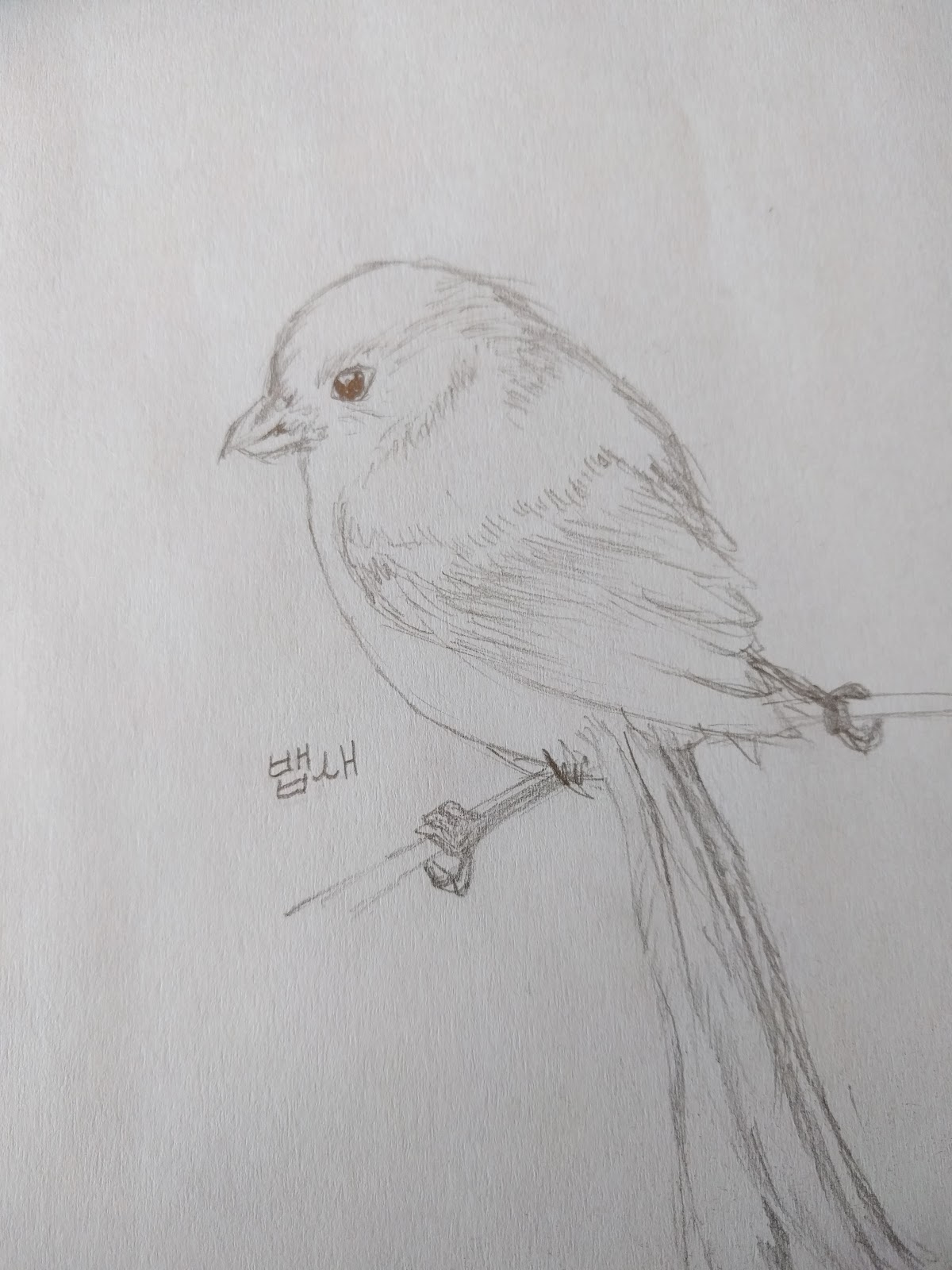
When we’re growing up, we’re our parents’ children. We start with their framework and hopefully move on from there. Those first teachers need to allow for, and even encourage, that growth and not simply expect blind obedience. I had a childhood pretty soaked in obedience. To this day, I struggle with self-doubt. I drew today’s illustration.  I have a bit of a talent to draw, however, I never grew beyond the point of an imitator to that of a genuine creator. Why? Simply put: fear. Which leads to my next idea.


Then, you need to have opportunities to face your fears and grow into something else.


Ideally, as we mature we are given general guidance with enough loose reins to allow us to try and fail or succeed on our own and then absorb the experiences before trying again or moving to something else. That, in my mind, is the idea behind the project-based and differentiated learning models in today’s schools. B.B. King’s statement encourages musicians to try playing like someone they admire but he adds that twist again: make it your own. How? It’s not about imitation, it’s about YOU, which brings me to the end.


Lastly, release yourself to your gifts...in their own time


Finally, back to the bird sketch. The bird is a crow-tit, or 뱁새 in Korean. BTS references this bird in several of their songs, especially in one called 뱁새 Silver Spoon with another translation by BTS Trans here. Why? They are going back to an old Korean saying: if a crow-tit tries to walk like a stork he will break his legs. A crow-tit has it’s own ways to be successful- it’s stupid for it to try to be a stork. No matter how hard a crow-tit tries (the song uses the term “try-hard” in translation), it won’t be successful.


Some people may be lucky enough to realize early on the one thing that says to them: this is ME. For most others, I think, it’s a slow discovery. It creeps up on you over time that things feel more comfortable, the world seems more clear and the people around you more dear. Through daily struggles you find yourself inhabiting that crow-tit’s body more readily and you eventually find yourself singing in its- your- own voice.

However long it takes is how long it takes.

Sunday, January 29, 2017

Remember, YOU Make the Weather

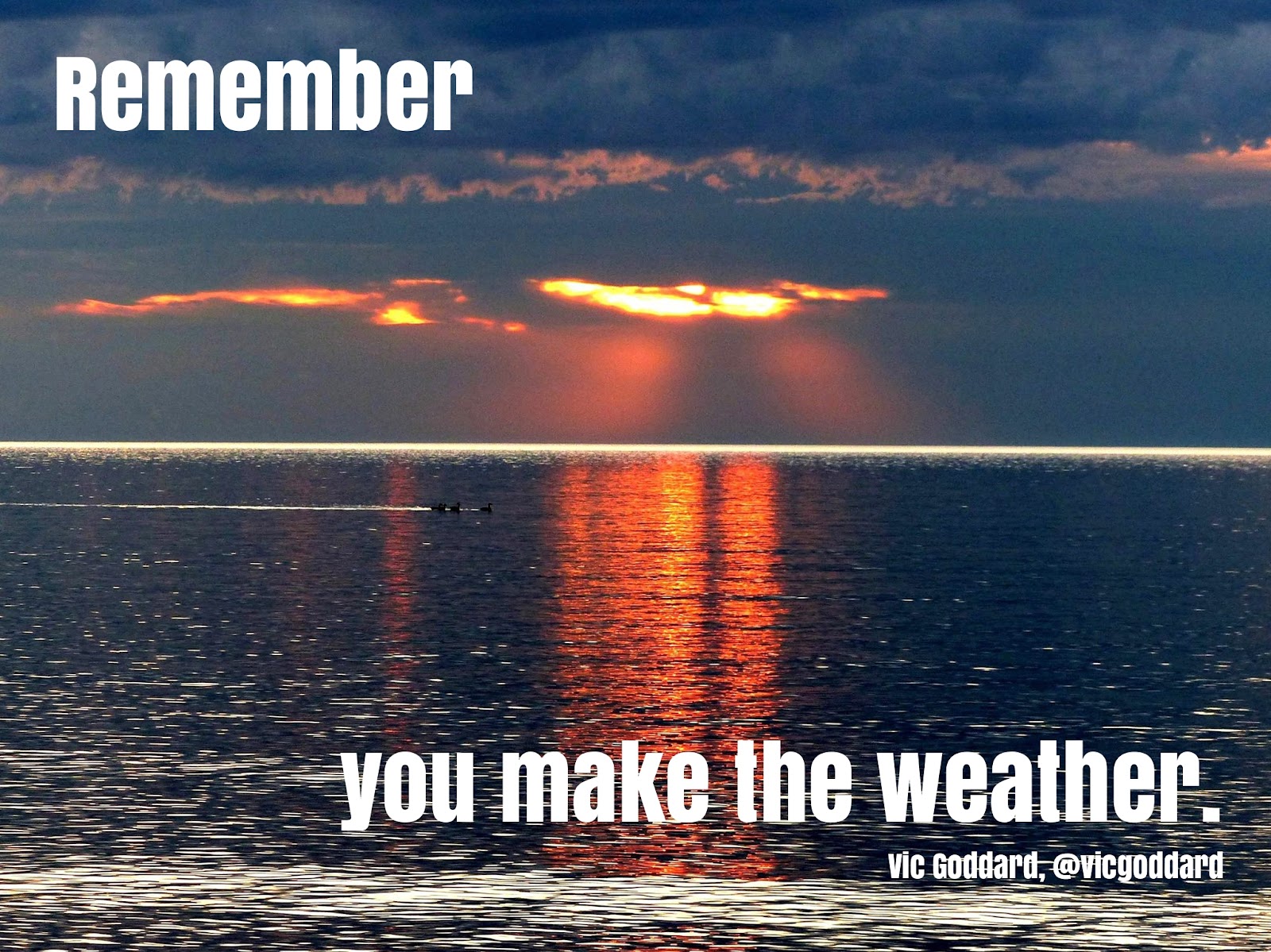
Remember (1).jpg
 Vic Goddard, Principal of Passmores, UK. Photo credit: Marlene Oswald
I already had an essay about the importance and value in investing in public education fleshed out when I stumbled upon this gem of a leadership mantra. Bam. 5 words linked to form pure awesomeness. I had to share it and explore it.


I wrote what I felt was a strong essay. However, when I looked at it again this morning, in light of all that is going on in the world today, I stopped yet again. It still wasn’t right. It was too flippant- too tongue-in-cheek. These 5 words need something else.


Mr. Goddard was talking as a school principal. He understands that his role is to captain the ship- the HMS or USS “INSERT SCHOOL NAME”. If the captain possesses traits such as enthusiasm, a keen human insight, creativity and having a deep knowledge of the craft, the mood of the ship cannot help but be positive and the weather, even it it is literally only a tiny bubble around the school, will be fair. The captain’s subordinates (teachers) and crew (students) will have hope they can weather the storms swirling about them and will do their best to sail onward together. I confess I’m envisioning a leader like Errol Flynn in his swashbuckling pirate roles to demonstrate the power of a principal’s role but but in truth, today’s female captains like Kate McCue are better real-life examples. Diligence, determination and flexibility are not nearly so glamorous traits but also play key roles.


What if the ship’s captain cannot construct that bubble of fair weather for the school? The same thing that happens when we are unable to do that for ourselves but on a much larger scale: feelings of defeat, despair, hostility, injustice and/or hopelessness for everyone within the bubble. Perhaps overwhelming amounts.


Guess what, though? We all create weather and are influenced by others’ weather. Whether you are a student, a parent, a principal or a president.


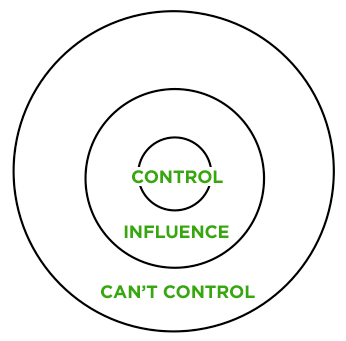
The weather we can control is what life coach Steven Covey referred to as our circle of influence. He described our world as being a series of nested rings. We have total control of our inner ring: ourselves. We can influence a larger ring called the Circle of Influence, including those around us. Beyond that, we have little to no control but that ring does touch our influence ring.


Image from: http://innomind.org/worry-only-about-the-problems-in-your-circle-of-influence/


We ALL have circles of control and circles of influence. We need to be aware of them and use them on a daily basis in positive ways. By doing that, we change ourselves, our communities and our cultures to something better than what we are today.


We tend to feel we have no control or influence when we are possessed by the demon known as FEAR. This emotion is deadly to both individuals and society on the whole. Think about it. When you are afraid, you lose your ability to think clearly. You react purely on instinct to protect yourself. Kids on the playground do it: they deny doing anything wrong, they blame others and they lash out physically or run away to hide. We do it as adults when we ban people and restrict people wholesale.


Living with FEAR as our driving force destroys us. It lures us into thinking there is no other way because it shrinks our feelings of control and influence. Our circles are still there- it’s just that they then become sources of those negative outcomes I outlined earlier. Defeat. Despair. Hostility. Injustice. Hopelessness. For us and everyone around us.


There’s hope! We can change our ways if we’ve slid under FEAR’s control. We can change our weather starting today and moving forward.


  1. Support our truth selves.


Each day, commit to our values and stand by them. That could mean anything from meditation, prayer or just giving ourselves a pep talk in the car every morning.


  1. Validate ourselves and those connected to us.


We need to feel like we’re moving forward. To achieve that, regularly give positive feedback. Say it, don’t assume it.


  1. Don’t allow negative ideas to gain ridiculous strength over us.


Admit mistakes. We all make them. In addition, let go of slights. Let others see us doing both to embolden them to do the same. Ignoring or denial of wrong is the root of many storms in our lives.


  1. Avoid the damage caused by irrationality.


Desperately want to go off on someone? Resist it! Back away to regroup. That way, we will not contribute to the rankness of attacks based on raw emotions and we can find another, more progressive way to deal.


  1. Build a sense of community.


Reach a hand out and ask for help. When you are able, extend a hand to help another. Also, show your appreciation. Sometimes we forget that we need to graciously accept help in order for someone to experience the blessing of giving.


We’re stronger together. The weather is fairer. The burdens are lighter. The rewards are far greater than living our lives based in FEAR.

Remember: YOU make the weather.

Peace and love to you.

Wednesday, January 4, 2017

Are We Cultivators or Killers?


At times I’ve been told:

“You’ll regret this decision.”
“I don’t trust anyone who smiles as much as you do.”
“You’re a dumb blond.”
“What’s THAT supposed to mean?”


At times I’ve told myself:

“It’s impossible.”
“I’m not good enough.”
“What’s the point in trying.”
“People will laugh at me.”


That old adage, “Sticks and stones can break my bones, but words will never hurt me”? Yeah, bullsh**. My examples are just that. You probably have a host of your own.

That’s part of my point. There’s misery everywhere and some argue there will always be suffering in the world. If you’re not strong enough inside, if you don’t have the means to see the destruction of these ideas and if you can’t pull yourself back out of the darkness…

These words can kill.

Whether they come from within your own mind or from outside, these words can kill your hopes, your dreams and your ideals. Some have jumped off bridges because of killing words. These firebombs can take your control and incinerate it, leaving you at the mercy of ever-growing doses of destruction. For once you start to believe them, their strength grows like wildfire.

Words are alive. They move. Out of my mind, down my arms and across the keyboard, my words seek a habitat to thrive in. Words out of a parent’s mouth go into the ears of their children where they get processed and then move out again to classroom and personal friends where they can breed and multiply across space and time. Whether we’re rich or poor, old or young, our words live on long after they exit our bodies. For better...or worse.

I agree we can’t eliminate suffering. However, we can make choices every day that, at the very least, don’t contribute to the overall supply that’s hanging around.

Tiny choices, like practicing saying something nice in the mirror or greeting a neighbor or offering someone a cup of coffee and our ear to hear their worries, all add up. They are a gift to something outside of ourselves. They build our empathy- our understanding of others. Small-scale positive choices warm hearts, including our own, and become significant: we become cultivators, not killers.

If we do that, then the urge to demean someone with killing words like those I listed at the beginning will not win in our hearts and minds. Those germs won’t exit our mouths to unleash their blights on the world. If we use cultivating words consistently, then when we are hit with killing ones, they won’t cause our very foundations to crumble beneath us.

Oh, they’ll hurt! However, we’ll be strong enough to acknowledge them for what they are and continue moving forward on our own chosen path.