Showing posts with label T1D. Show all posts

Wednesday, January 1, 2020

Peeping into 2020


I reviewed 2018 in my essay The Mountain That Was 2018, illustrated by the great photography of Brian Crosby. We continue to connect on Twitter and I again asked him if I could use one of his images for this year. I’m grateful for our long-distance friendship! That continuity of connection with others is one facet of 2019’s goodness.

Here are my Twitter profiles for both 2018 and 2019:
2018
2019


I feel the start of a new book in my fingertips- perhaps a biographical/historical one. To me, writing is a need that comes and goes. Perhaps I’m like the nut trees that rest for years and then suddenly, all together, pick a year in which to dump all their reserves into a bumper crop of seeds. (More on that later. 2019 had a lot of connections to the natural world for me- if you haven’t read books like Peter Wohlleben’s The Hidden Life of Trees or Robin Wall Kimmerer’s Braiding Sweetgrass, I recommend checking them out.)


While my writing slowed, I did start a new blog in 2019. Leaf Letters is where I plan on writing about my work at Retzer Nature Center. My writing output was low but while I wrote only 5,500 words in 2019, there was a lot going on in the background. There is value in quiet and I was reminded in 2019 that just when you feel things petering out, it could simply be time to evolve like the caterpillar. Life has to first stop in order to go through metamorphosis to something else.


My "pinkie promise" to myself was that in 2019 I would try every day, using all my parts: body, mind, and spirit. That was a tough sell. At the time, I wanted to go the other way; I wanted to stop trying. The song, Promise, that Jimin from BTS posted on SoundCloud at the end of 2018, includes these lyrics, which compelled me to make my promise and write it down as a reminder to myself:

Now promise me, oh, oh
Several times a day, oh, oh
Even if you feel that you are alone, oh, oh
Don't throw yourself away, oh, oh
Oh, oh, oh, oh, hold on for a moment
Intertwine our pinkies
And promise me now, oh, oh, oh, oh

In the spring of 2019, I was given a surprise employment opportunity. To say I was shocked and in complete disbelief that I could bring the environmental science that I had loved in my youth together with the more recent experience I’ve gained in the classroom to be a part-time teaching naturalist is a gross understatement. It’s been beautifully surreal. I had almost cleansed my head and house of all this material, as the last 30 years has given me little to suggest I could apply it anywhere for any benefit to self or others: always the bridesmaid, never the bride. I say “almost cleansed”. There were bits of reluctant sadness to this, therefore proof that there was still longing within.


I was both figuratively and literally packing my things away at the beginning of this year. Then, a hand was extended. That thing I’ve been saying for years now, “We’re stronger together”? Yeah, that truth evidenced itself to me in huge ways in 2019. It’s real.


My intention for 2019? It was just want to witness. I wanted to simply be and do in love and hope. Together. I flagged and faltered after the start of the year, but was brought back by others. Intention fulfilled. There were times when I was (or hoped to be) that hand. I thank those friends near and far for allowing me to be there to witness their own struggles.


My 2020? I want to explore the idea that it’s ALL stronger together. I’ve edited my Twitter profile. Check it out and follow if you’d like. I’m even more convinced we’re stronger together. I want to unite more people to both one another and to our natural surroundings.


I ended 2018 with an essay from my book, Dear Warriors, called Enjoying Life Day by Day. It suggested that everything we do on a daily basis can be viewed as tiny pebbles, which add up to the mountains which are the sum of our lives and give others a basis for theirs.


For 2019 and going into 2020, I’m going back to Dear Teachers. Here's an essay illustrated by my friend and fellow author, Marlene Oswald, from her excursions to my new place of work. Please enjoy one of my few poems: Seeing.


Seeing


Hold on a second.
Can you see it?

We can march through life, wrapped up in our worries.
We can rush all about, minds set only on our goals.
We can doggedly move on, determined to get it done.

Hold on a second.
Can you see it?

Through the static of everything around us, something emerges.
Amongst the hustle and bustle a presence makes itself known.
It is the tender spirit of Life gently reminding us of our hearts.

It speaks of sweetness.

Is it the warm hug of a loving student?
Is it a tender word of thanks from a friend?
Is it the grateful smile at home as you open the door?

Thinking of Life’s sweetness,

What do you see?

REFLECTION: My heart sees...


Best wishes to all of us in 2020.


Sunday, November 17, 2019

Compassion Over Empathy: A Look at Nature, Health, and Education


Mike Natter is a physician and someone with T1D whom I follow on Twitter. He's also a great artist (check out his works available on ArtSugar!) and this tweet and accompanying image struck a chord with me.

Dr. Elisabeth Poorman responded to this question on the balancing act that physicians face on a daily basis. I’m going to quote and paraphrase her excellent tweetorial on the subject of empathy and compassion:

Sympathy:  "a pity-based response to a distressing situation that is characterized by a lack of relational understanding and the self-preservation of the observer." The observer is not invested in the pain.

Empathy: "An effective response to understand an individual’s suffering through emotional resonance." This response is based on a more genuine connection and is preferred by those in need, but higher levels of empathy lead to a greater likelihood of higher inflammation and burnout scores in a study of nurses.

Emotional empathy: We feel the other’s pain. It can be overwhelming, so instead of doing what you can, you may shut down and run away (AKA burnout and compassion fatigue).

Cognitive empathy: We know the other is in pain but remotely. 

Compassion: "A virtuous response that seeks to address the suffering and needs of a person through relational understanding and action." It’s closer to cognitive empathy, which is based on reason and leans toward action to correct the other's concerns. As @stefanfersetz said to Dr. Poorman, it’s “engagement with boundaries”. The observer is not THE solution but CAN play a role, they know what it is, and they  DO it.

Burnout and compassion fatigue: if we feel the emotional distress of someone, we are more likely to burnout or become exhausted by it so much that we can’t even respond to it.

To me, sympathy is sort of positive and I’d rather have it than indifference, but it’s not very helpful. 


The results are too chancy because the connection is weak; if someone feels sympathy, they may very well never do anything. However, it can be a gateway to the better response of empathy, and the even better one of compassion.

Dr. Natter’s illustration depicts empathy on one side. I believe Dr. Poorman is suggesting that side should actually be compassion. I see his other side “professional distance” as “cognitive empathy”.

In the teaching world, I believe working from compassion is the basis for response techniques like “I see that you are…” and “When you are able to, I can...” when a student is in crisis. 


Rather than taking in the child’s anger, fear, sadness, etc, the adult is positioning themselves as willing to do eventually something, but not partake directly in the pain. Students may love our hearts and tears, and we may want to give them, but they need genuine fixes. And if teachers are constantly dealing with their inner cores being exposed due to empathy, the attacks by other adults on school finances, regulations, performance evals, data streams, and safety become death blows.

As someone with a chronic medical condition, I have experienced every single one of these terms over the years. 


From a nurse practitioner who saved my opinion on healthcare providers with her compassionate observations and achievable challenges to me, to the exhausted physician who testily told me to just stop eating after 6PM, each has cultivated a different response in me. In my best mindset, I can feel compassion for the burnt-out physician, but it set my own health backward because I became angry and felt abandoned. I probably was erroneously looking for empathy- I can clearly see the lure of it.

I work as a naturalist and wonder: what does environmental compassion look like? 


It should not be pity-based sympathy for a mouse facing an owl. It should not be tearful empathy for a frog facing a drying pond. Or at least not just these things. We talk about developing our students’ connections with and understandings of their natural environment. With those two things, they can see tools they can use, choices they can make, and laws they can formulate to create the most opportunities for the most species, including their own. That's powerful stuff.

Perhaps the major strength and motivator to operate with compassion is that it avoids the extreme ends of human emotional response on both sides of the equation (person in crisis and responder). At least during that moment of crisis for I know fully well there's intense gratitude possible after the fact from those relieved of their suffering.

As Dr. Natter’s image depicts, it’s not easy. 


Nor, is success guaranteed. Even if one is extremely good at operating within the realm of compassion, we can easily fall back on other coping strategies. Why? Because we're not perfect! Dr. Poorman says she must practice every day and it will be a lifelong process. Why? Because none of us have all the abilities to change all things to "good". It’s tough to offer something, but not THE thing that fixes it all.

I think that’s when we need to practice a bit of Buddhism: we must remind ourselves that there will always be suffering. 


We can help alleviate it, but it’ll never go away. And in my best mindset, I can find comfort in that. It means we’re reminded to enjoy the goodness. To share with each other. To revel, dance, and love when we can. In my book about living with type 1 diabetes, Dear Warriors, I wrote that it’s taught me many things, or at least shown me many things, including these concepts.

I took this picture late yesterday afternoon, when the sun was preparing to dive below the snowy horizon before 4:30 PM. The light was warm and magical, partially due to its transience. 

Here’s to us all seeing and feeling the light as it still shines on us. And to practicing compassion on ourselves, each other, and our world every day we see another sunrise.

Thursday, May 16, 2019

Our Collaborative Music

The following is an excerpt from my book about living with type 1 diabetes, Dear Warriors. The biggest gifts I received in writing this book were connecting to others and forcing myself to be more open to my humanity and that of others. The book has art from 12 others with this condition. I referenced several others within my writing as well. Overall, I believe the book became a testament to the universal fact that we're so much more alike than we think and we need each other, no matter what we may say, believe, or do.

We're stronger together.

I saw BTS again this past weekend on their Speak Yourself tour. I met some more amazingly fun and positive fans. My whole family was in Chicago with me, and we all experienced seeing and being within thousands of ARMY throughout the city. So many different people and yet...connected. My husband said he has a new respect for and comfort with the BTS fandom- it wasn't what he expected.

We weren't what he had assumed.

I think we all make that mistake a lot in life. We make assumptions. We grasp onto fears. We hide in ignorance. It's "safe" but we can all also make efforts every day to be more collaborative. Whether big or small- we can do more and live better if we take the risk to share our personal music.

Let me show you...


THE WARRIOR SPIRIT

Artist: Natalie Force, 15
Age at diagnosis: 14

Title: You’re Not Alone

“When I was first diagnosed, I struggled with how alone I felt. I constantly felt that no one knew what it felt like to go through this. It soon became clear that many people are going through this every day of their lives. I realized I’m not fighting these demons alone and I never will fight them alone. The inspiration for my drawing came from how scared I felt in the beginning, to how I feel now knowing I can overcome this obstacle that life has thrown me.”
 
OUR COLLABORATIVE MUSIC: NATALIE FORCE

“Music in the soul can be heard by the universe.”
- Lao Tzu, Philosopher

To me, my soul is the part of me that connects me to others. It’s akin to the spirit I talk about through this book. When I care for someone or something, my soul is involved. Art, pets, people, and places: when we feel that deep sense of linkage, our soul is touching the soul of that other. That’s how I see it, anyway.

Sometimes, we don’t feel that connection. Natalie’s image does a great job depicting what that feels like. Here, she shows people with T1D, including herself front and center, in carefully drawn detail and frozen flat-footed by the situation they find themselves in, whereas everyone else around them continues with their own lives, seemingly oblivious. She furthers that theme of disconnection by showing every single character, Diabetic Warrior or not, going about their business…alone. Everyone is alone. Natalie has illustrated that very “solitary warrior syndrome” that I say is not the only option we have when we consider the Warrior term.

From the Lao Tzu quote, one soul can speak outward to be heard. The reverse is true as well: we can open to the universe’s music, and our souls will be nourished and restored.

From what Natalie’s mom has told me of her and her diagnosis, of the three parts of ourselves that I’ve outlined, Natalie lived actively in her body before T1D. She has excelled as an athlete. Physical talent and a bright personality can allow easy entrance into this other part of ourselves: that community and spirit. Disrupt the confidence in and performance of that body side, and you might find yourself experiencing a plunge of the spirit: alienation. I see that in Natalie’s tears, her worried face and the Blue Circle, the “universal symbol for diabetes”, above each Diabetic Warrior’s head. Marked. Different. Alone. She drew the other Diabetic Warriors with small smiles as if they were somewhat comfortable- more so than she felt. Why? Perhaps she believed they had the condition longer and were more comfortable with it and what it takes to deal with T1D even as they still appear alone.

Natalie portrays a range of alienation levels between self and other. I’m proposing in this book that we all have a spiritual component that can take hits but also grow, therefore we have another bond with each other instead of a divider. Alopecia. Fibromyalgia. Cancer. Race. Religion. Gender. Sexual orientation. Eating disorders. Those dealt physical and mental trauma. All these life factors can tear and destroy. And yet, I’ve known people with struggles within all these areas and have been awestruck by how some have handled their lives. These are Warriors with songs we can all learn from.

Each condition affects how we identify ourselves and how we relate to others. These variables alter our music: we feel it, and others see it. Sometimes what we face deepens and richens our song of life. Sometimes it causes strife and off chords develop. The wild oscillations can become unbearable noise. If we consider these truths and apply those details to the various shadowy figures in Natalie’s picture, their vagueness disappears like fog burned by the hot summer sun. Those faceless masses become companion Warriors, each with circumstances, each needing others and what they possess. We are different, but also the same.

Lao Tzu described music as being in the soul. What if we say that music is our soul? Each person has a song deep within, including notes of struggle. Those songs are audible to the world if we share them. That’s key: if we share them. If we do, the world’s chorus can fold those tunes into the overall score and we can all benefit from the net effect. We can. We should. We must.

By doing that, as Natalie described, “It soon became clear that many people are going through this every day of their lives.” I believe Natalie’s eyes will soon dry enough for her to sing her song loud and proud as time marches on.

The athlete within Natalie taught me a lesson. On sports teams like those she plays in, each player has a different role and needs to display various skills. The same applies to the world full of Warriors. We all do better by bringing ourselves and our talents together. Both before and after my T1D diagnosis, I’ve undergone that drifting alienation that Natalie has depicted in her drawing. By receiving this image (and all the others in this book), reading the attached messages, and sitting with it all, I’ve also experienced an example of the opposite of alienation and apathy: empathy. I felt her music resonate with mine. I’ve sensed our spirits touch. When we build identification like that, we can keep moving forward. That touching is what gets us through our dark times.

When we don’t feel alone, we have hope. With hope, almost anything’s possible! 

It all comes down to connections. We each need exposure to different songs, and the world needs to hear ours, too. Where? How? It depends. Things like family, friends, religions, special events, personal interest groups, social media and professional organizations are a few. And we can’t sit on the sidelines while we’re there. We must actively participate to feed our souls. Are we going to a concert? Let’s introduce ourselves to those around us. Do we have a medical condition? Let’s speak clearly and calmly without embarrassment and look for comrades-in-arms. Are we attending a family event? Let’s really be with the family and not just merely suffer their presence or hide our true selves. Are we traveling? Let’s earnestly move within that new place and interact with its people. By doing these things, we may gain new friends, appreciations, and songs.

Shared meals, art, events, stories, and time bridge the gap between us and the “other”. Touching other spirits, we can begin to see we’re part of one big music-filled dance instead of single notes scattered across an empty keyboard.


Monday, December 24, 2018

The Mountain That Was 2018...With a free excerpt from my book!


Here’s my Twitter profile, where I declared my intentions for 2018 as the new year began.


I wanted to write about my passions: type 1 diabetes, health care, mental health, and K-pop. Such a weird combination, I know. But, it’s who I found myself to be and I wished to be true to that self. I also did not wish to work in a vacuum. I craved learning from others and sharing that wacky self of mine with the world.

How did I do?

I wrote 32 entries on Verbostratis, which totals at least 8,000 words. I also published my second book, Dear Warriors, which came in at just under 35,000. In addition, I closed out the year of reflections on Dear Teachers in June with 21 blog entries on that blog, which would add another 5,000 words.

Seems like quite a bit of writing, but that is significantly less than 2017. However, there are connections I made in personal writing that aren’t reflected in these figures. I asked many people for help in developing Dear Warriors. I shared and listened, which was something I wanted to focus on this year.

I still feel pretty darn insignificant, though. I can see more clearly how incredibly tiny I am in this world and confess that my marketing efforts tanked completely in the last half of the year as my confidence sunk. I talked a lot, but do not have much to show for it. The relationships I started this year, especially those with the artists in Dear Warriors, are the real gems of my year. Professionally, however, I failed: selling 4 books total on Amazon in 2018.

So, my mental health took some blows. My writing efforts ceased after I hit the “publish” button on Dear Warriors in October. Life’s financial requirements drove me to search for and find an hourly wage once again. Part of me is incredibly grateful to have once again found a means for a steady income of sorts and a chance to learn in a new environment. Part of me is sad that my writing dreams appear to have shriveled and blown away, more than likely forever.

There are now 7.7 billion of us on Earth, most in the same boat as me. Many are in far worse straits. I remind myself that happiness can be felt by anyone at any moment right alongside the other less pleasant emotions we have. It’s not necessarily connected to wealth, health, or status, but it is linked to a sense of connection. We suffer when we feel alone.

That brings me to my overarching goal for 2018: exploring the statement “We are stronger #together”. My efforts in Dear Warriors raised my belief and understanding that we must be with one another in order to flourish. Whether we like it or not, or see it or not, we need each other. Educator @ChristieNold recently pointed out in a Twitter thread that she has struggles picking battles, as suggested by @ValeriaBrownEdu. They are immersed in cultivating social justice and a future with a better framework via the Education world. While we differ in the details of what we do, they are Warriors by my side as I am at theirs.

To me, “together” also means around the globe, thus my heart and 3-part globe emojis. My interest in Korean culture continued through the year. I didn’t make it to any Kpop concerts, unfortunately. However, I did continue studying the language, foods, music, and current events. I can’t relate to it all, but I can see things I can connect to. That gives me hope.

My 2019? I just want to witness. I want to simply be and do in love and hope. Together.

Please enjoy the following excerpt from my book, Dear Warriors. I think it does a good job of depicting my view on what we face (whether we have type 1 diabetes or not) and how we’re together. As in all my work, I’ve added a reflection at the end for you as the reader to use if you wish.


ENJOYING LIFE DAY BY DAY

“The man who moves a mountain
begins by carrying away small stones.”
- Chinese Proverb

Of the 7.5 billion or so people on the planet today, I’d say my life registers a “5” on a 1-10 scale of success. I’m better off than many and not as well as some. I’ve done nothing of any real consequence: I have no parks or animal species named in my honor. However, when I’m grounded in confidence, I can feel good reflecting on what my story has been up to now.

This quote talks of carrying away stones, implying the mountain is an obstacle to be destroyed. I want to stretch that idea a bit. Mountains exist both before and after us. They can be impediments, monuments, or both. We Warriors can take a raw challenge (the original mountain), and through effort, we can transform it into something that is ours. Something we can point to with pride.

We make a new mountain. The mountains that exist today are the product of many Warriors’ yesterdays. As an example, consider the fight for civil rights in the United States. It’s a series of challenges and achievements over time that is still slowly progressing.

For a second example, let’s look at the world of music today. Pick an artist you enjoy. That artist may be cutting edge, but their art is built upon that of other musicians near and far. No musician is without muses or inspirations. I know of a heavy metal band out of New Dehli, India called Bloodywood. Listening to their music, one can pick out several Western metal genres, but their Indian lyrics, themes, and instruments shine through. They incorporated a group of dancers in one music video, adding an almost Korean pop vibe. Inspiration flows in all directions; songs coming out of The United States and Europe today have flavors from around the world, as well. These are mountains morphing, splitting, and merging again and again.

Sometimes we may argue that we haven’t moved anything; there are no mountains or note-worthy accomplishments in our lives. However, they are there if we look: friendships built, art created, parties hosted, transportation provided, medical milestones reached, children nurtured, and careers led.

Mountains can be moved and formed by individuals or groups. Therefore, my mountains aren’t necessarily yours (but they could be) and yours could be insurmountable by me or, on the flip side, built with the help of others, like me.

Our mountains move with day-to-day effort. For Diabetic Warriors, the small stones include regularly checking our blood sugar, eating well and exercising. Staying hydrated and finding time for things we enjoy are also stones, as is sharing our stories. When we do these things regularly, we’ll move a ton of gravel. Acknowledging those daily accomplishments allows us to wake up the next morning, revved up for another day where we can move even more.

This work we do isn’t very glamorous many times. It can be tedious or even painful. However, it’s part of every life. It’s hard. It’s valuable. It’s respectable. Our active living moves, builds, and reforms reality for ourselves and others. How can I be certain? I have seen it repeatedly in my life and those of many others, from classrooms to cubicles. Stephen King’s The Shawshank Redemption is an example of this, too.

Let’s not be blind to the pebbles. Let’s not forget the importance of those stones that make up our living. It’s a huge accomplishment and worthy of recognition. We don’t necessarily want to build these mountains, especially when it is based on a subject like our medical conditions or fighting for social justice. There are days we cringe at the mere idea of another day moving rock. However, these mountains are ours to claim as monuments to our efforts.

We’ve earned every stone.


REFLECTION: I’m proud of this. It’s big to me. I’ve built or I’m building…:

Tuesday, June 5, 2018

6 Choices to Improve our Speech Game

As I’m always going on about how we need each other, and how I insist that we’re stronger together, I thought it was time that I examine 6 specific choices we can make that will allow this to happen. I’m interested in physical and mental health care, education and k-pop. I believe this actions can help in all these arenas- and beyond.

 PLEASE NOTE: If you want to just skip the reading, scroll down to the awesome video from Teaching Tolerance on Countering Online Hate Speech.

1. Believe everyone deserves space to speak.

Whatever your size, shape, skin tone, sex, sexual orientation or preferences, religion, political opinions, ethnicity- you name it: you deserve a space to speak. We may not agree with each other, but we both deserve the opportunity to state our cases. If we follow the other ideas I list below, we should be able to coexist. We may get along life BFFs. We may choose to disagree and have little to do with each other. Or, we may choose to see where we can work together despite our differences. Whatever the case, neither of us should try to silence the other.


2. Acknowledge everyone deserves space to be.


Ever want to just run away from it all and hide? Believe that you deserve the space you’re in. Breathe in that fact and exhale the fear and/or anger talking. Ever feel like that other person should just go and die? Believe that they deserve the space they’re in just as much. Breathe in that truth and exhale the fear and/or anger talking. You and that “other” person are both human beings. As bystanders, if we see someone trying to silence another, we should calmly and directly say, “I think __ has the right to their opinion and I think what you’re saying is hurtful/sexist/etc.”. If we see someone run in fear, we should calmly and directly say, “I think you have the right to your opinion. I told them I think what they said was hurtful/racist/etc.”.


3. Think and speak with “we” in mind.

No one likes to be looked down upon. We should talk in ways that keep us looking at each other eye-to-eye. You may not believe it, but the way we say things affects how others take in what we say. Choices like “You people need to…” and “You women should just…” kill respect, light fuses and try to place the speaker as someone high up in a fortress, looking down on those they are addressing. Switching it around to “I think we could…” or “I disagree with that opinion…” will still get our point across. I used both “you” and “I/we” in this paragraph. Which sentences made you feel more more relaxed or more defensive?


4. Choose to meet face-to-face.

 I’m really tired of the phrase “keyboard warrior”. As I’m exploring in my book for those with type 1 diabetes, the term “warrior” does not need to mean a vicious, cut-throat and cloaked vigilant. It’s true that we can do/say things behind the anonymity of a screen that we might not do in public. That’s why meeting with and talking with people directly is vital to our humanity. The students behind the March for Our Lives are doing this over the summer, with their cross-country bus tour Road to Change. Coffee shops, concerts, conventions- even video conferencing like VLive or on our phones- anywhere were we see and hear each other in real-time can build our connections with others, helping us see the other points I’ve outlined so far. The keyboard time can be turned toward building those relationships, too, so we become warriors standing in solidarity against hardships and things, not each other.


5. Understand that opinions are biases, not facts.


I’ve emphasized “opinion” here, because what we think and feel cause most of our wild behaviors. What about facts? Facts can be used as weapons to stoke opinions. I’m reminded of the amazing reply that Adam Savage gave to the question, “What’s your biggest science no-no?”. His reply: “Bias.”. Facts shouldn’t be affected our attitudes; at their root, they simply are what they are. It’s vital to look at facts calmly and ask ourselves what is the exact truth involved, and what is what we feel or wish. I can say, “---- are kings!” and cite data to support. The data are facts proving some relative influence in the world, but my original statement is purely biased opinion. I can say, “Politicians are killing people with T1D” and cite data on insulin prices. The prices are facts but my original statement is simply my opinion to get my point across that we as a country need to look at health care. We should clearly label each other’s and our own biased opinions.


6. Instead of seeking a victory, practice forgiving. Or at least, forgetting.


When we feel attacked, our instinct can be to retaliate or run. When we read something that ticks us off, our knee jerk reaction might be to “put that person in their place”. Even when we reach out to defend someone in need, we need to remember these other points I’ve outlined and not seek another’s annihilation. Hurting others keeps that destructive cycle going and should not be an used- even if we feel justified and tempted to use it in the defense of someone else.

Forgiveness. If we can’t manage that, let’s choose forgetting and calmly walking away. Those options remind us that we all make mistakes and there’s hope for eventual change. They remind that we all have baggage. That none of us is superior to another. That no one is a lost cause and we can all someday, somewhere, help someone out and do something good.

We’re never going to eliminate all the negatives in humanity. But we can reduce their influence by the choices we make every day. As in parenting, kickback from those soaked in these destructive behaviors will occur when we begin. However, if we persist, support and work together, we can make positive changes.


Helpful links from Teaching Tolerance:

Teaching Tolerance Countering Online Hate Speech This is a great video with specific examples and sample responses to use when we encounter hate speech online.

How Does "Fake" News Become News? This is a light-hearted but informational video detailing how confirmation bias and filter bubbles affect what information we tend to believe and spread. If your social media are negative, you have built it that way. With help from this video, you can change it, too!

Wednesday, February 28, 2018

The Complex Crystals of Us


I read a nice intro to Epictetus on DailyStoic today. Epictetus was a Greek philosopher who died in 135 AD, at the ripe age of 85. He was born a slave, but eventually became a teacher whose words are still studied today, almost 2,000 years later. This single quote alone holds great truths that we would do well to remember today. I picked it to help me consider exactly who, or what, we are.

I'm not just my body. If I lose my arm from the elbow, I’m still me, no less a human- just slightly modified. If I looked at that dismembered limb, I would not think that it was sad or angry to be torn away from the rest of me. I wouldn’t think it had emotions or thoughts on the state of things, or of anything else, for that matter. Perhaps that is not a rightful assumption, but it is a common enough belief today.

I’m not just my body and my mind. If I take my body, my thoughts and feelings and go live alone on a mountain somewhere, I could live fairly well. I might connect deeply with my surroundings and feel attached to them, but I would be doing so as a single member of my species. What if, instead, I took that same body, thoughts and feelings and lived in a community of other people? What if I became dependent upon those relationships: giving and taking, existing and responding to the group dynamics of a common species? Would I be the same person? Would I even be the same person regardless of the community of people I placed myself in? I doubt it. I’d still be me, just slightly (or perhaps greatly) modified.

We are body, mind and spirit. The concrete body. The mind that powers our personalities and thoughts. The spirit that connects us to other humans. 

Three separate facets of the complex jewels that are us.


I discussed this 3-part self in my guided journal for educators, Dear Teachers. I am also working on its implications for those living with type 1 diabetes in my NEW book, Dear Warriors, available later this year. Know a T1D with art talents? Please click and share the Dear Warriors link for details on my interest for illustrations by T1Ds!


Friday, October 20, 2017

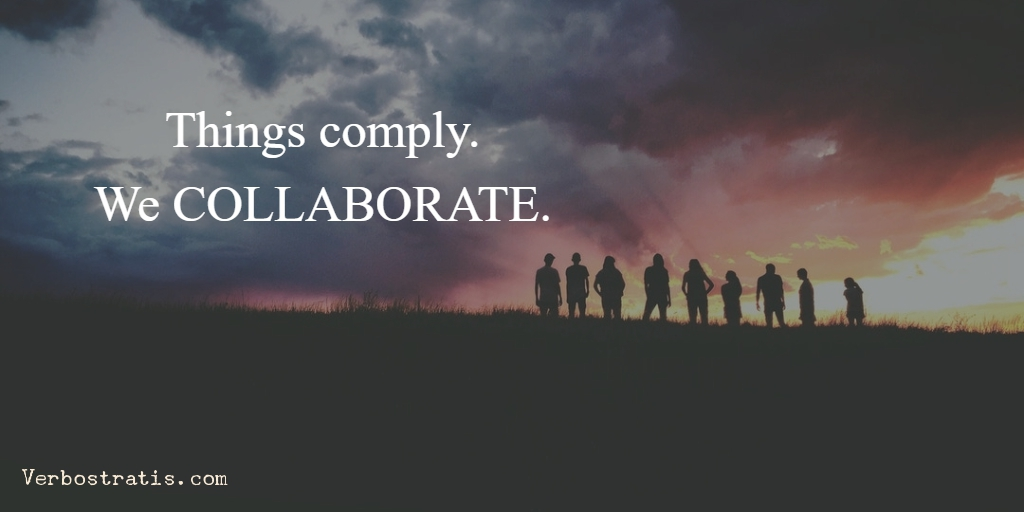
Things Comply. We Collaborate.


This essay began as a quick sketch as I was editing my upcoming book, tentatively titled Dear Warriors: A guided journal to support & inspire those with diabetes. It grew and a bridge developed between two of my passions, diabetes and education. I felt compelled to share it live today. I’d love to hear your response!


Compliant vs Noncompliant. Absolute trigger words for me.


To be compliant means to conform or bend to an authority. Merriam-Webster defines it as “ready or disposed to comply :submissive.” and its opposite, noncompliance, as “ :failure or refusal to comply with something”.


I was reminded of these words recently while observing a twitter chat regarding diabetic care. I guess I had blocked the dark pall these terms cause to fall over my mind during the last few years as I’ve been focusing on raising my kids and exploring the world of education. If you’re not aware, when medical directions are not being followed, the phrase “patient is noncompliant” can be used. If they are followed, the “patient is compliant”.


The use of “compliant” and “noncompliant” does not usually happen in education today. “Compliant” may be used to indicate simple indifference but they both smell of right/wrong, good/bad and strength/weakness and are typically avoided. I immediately wondered why they would still be used to describe diabetic warriors today. Or ANYONE for that matter. Even two former presidents are giving speeches on our need to work together.


You demand my submissiveness?!? <insert heated response here>


The truth is, whether you’re in first grade or midlife, you want to belong. You want to be a part of something. You want to be valued. You want to be respected. You want to be heard and to feel comfortable sharing your reality.


Julie Woodard M.Ed is a 6th grade elementary teacher in Texas with a talent for depicting the critical messages teachers are trying to convey to tomorrow’s adults: their students. I’d like you and I to sit for a bit together. Let’s examine a couple of her pieces and consider these ideas in light of today’s adults and today’s people (young and old) who are saddled with chronic conditions like diabetes and see what we discover. Why?


If we’re leading our children there, couldn’t we embrace it, too? And should?


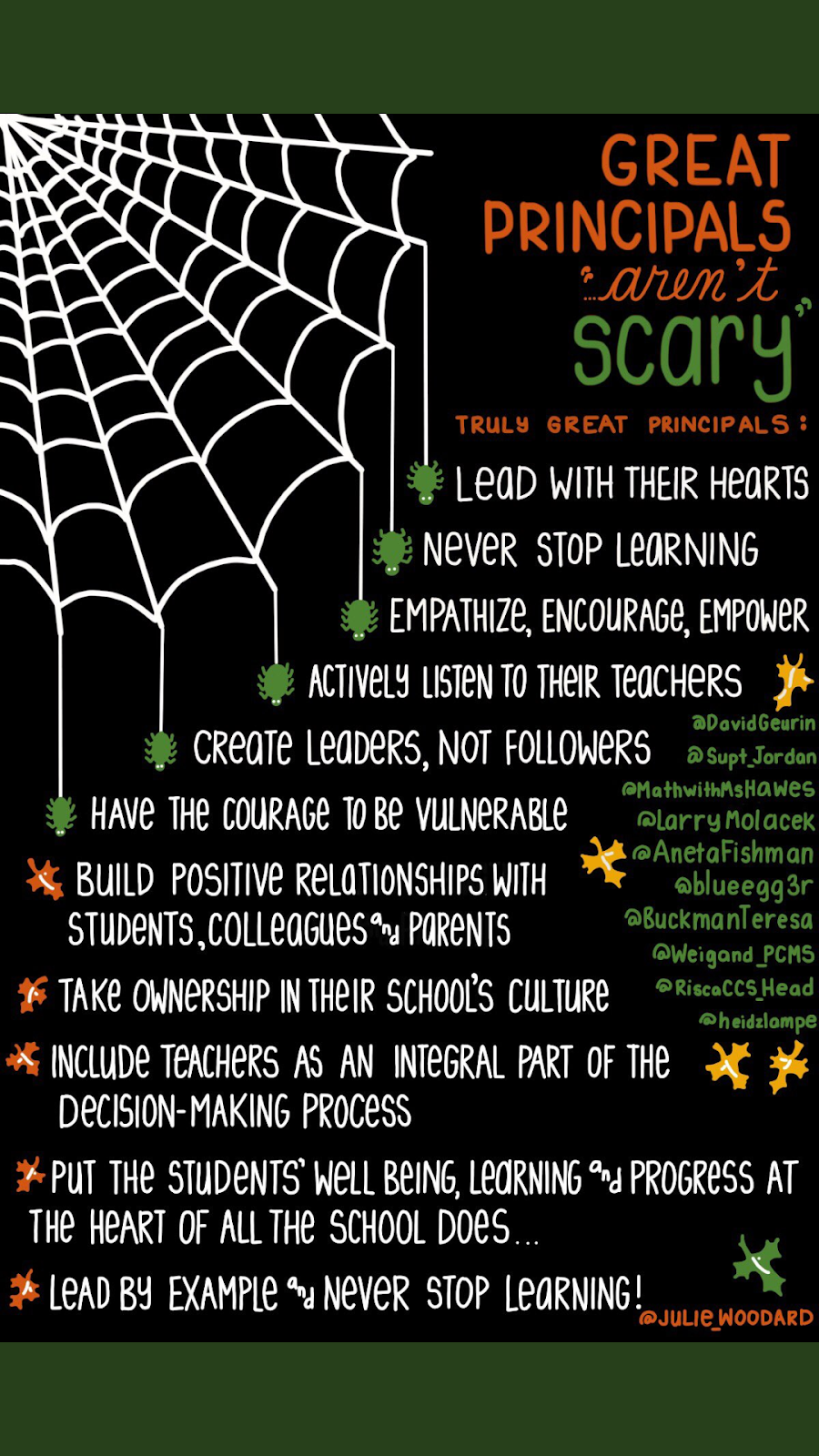
October is National Principals Month and it also hosts National Bosses Day. Mrs. Woodard’s graphic on what defines a good principal smartly ties in the fall season. Let’s look what happens when we replace “principal” with “boss”. Why? If the terms “compliant” and “noncompliant” are to be used, someone has to be the boss, right? I'd like to show that even if the medical directions are from a "boss", that boss should not have this terminology in their vocabulary toolbox.


According to this graphic, a good boss creates leaders, not followers. They include others who are involved in a situation as “an integral part of the decision-making process” and they “empathize, encourage, (and) empower”. Those traits seem to go against the notion of compliance. “Just submit.”, you might want to say. “Why should I do any of that?”, you might be still asking.


It’s because empowered partners work together to something greater via collaboration.


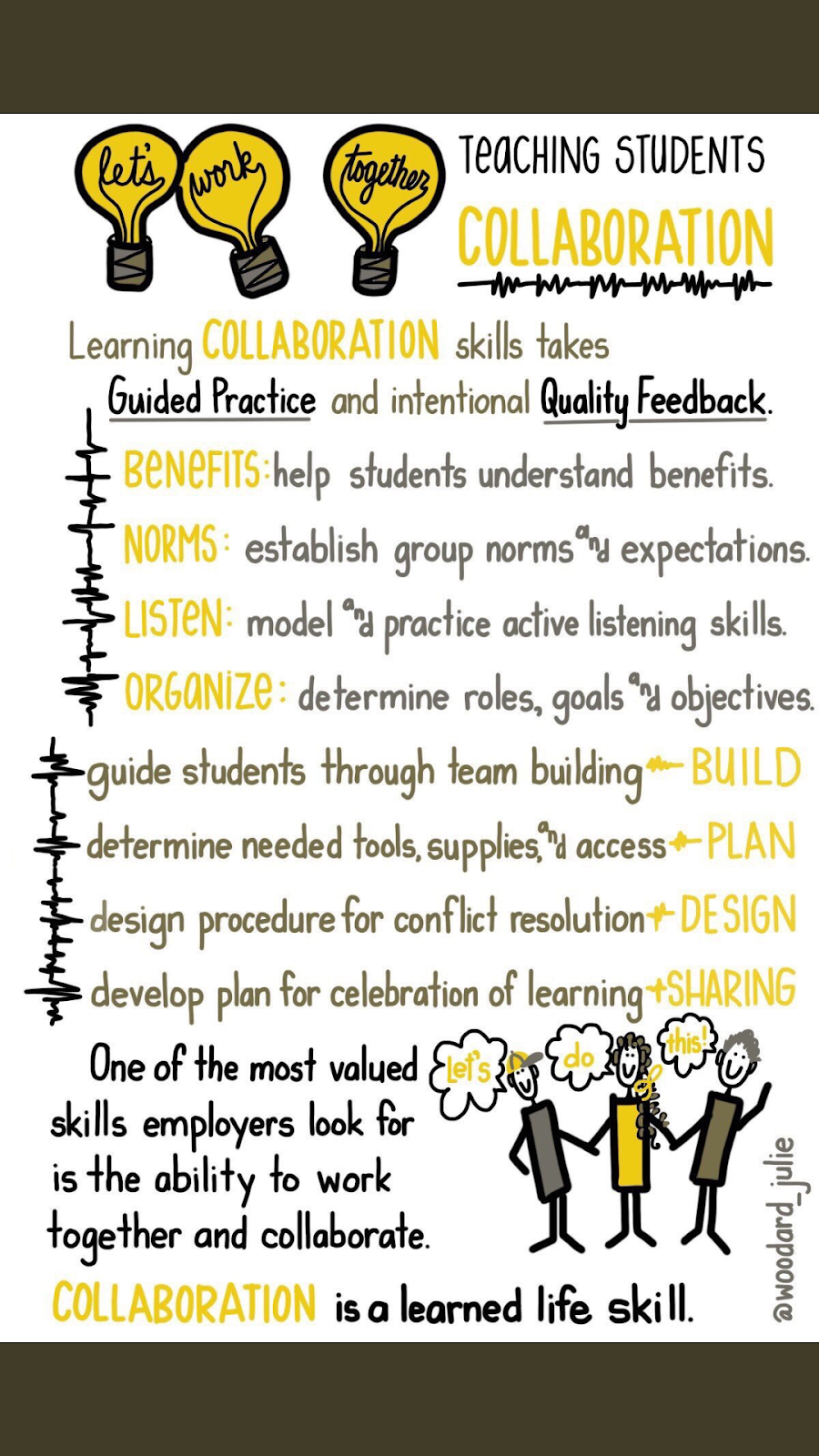
Enter Mrs. Woodard’s 2nd graphic on collaboration. Collaboration requires work and practice. Notice the EKG-like art on her tool! It’s almost tailor-made for a medical textbook. This subject is at our heart: it’s vital. Again, let’s look at this image and take out the notion that this is geared to children and apply it to our adult world.


Information is shared and everyone involved learns something with collaboration. It levels the field by establishing goals and expectations together. Clearly defined roles, needs and ways to resolve problems are outlined in advance. As Mrs. Woodard reminds us, “One of the most valued skills employers look for is the ability to work together and collaborate.” Speaker, entrepreneur, corporate organizer and executive coach leader Anthony C. Gruppo speaks in what I feel are similar terms, tweeting, “When you aspire to achieve for others, the result exceeds what you imagined for yourself.” If that’s the case, we should act accordingly.


Things and objects should be compliant to human collaborative efforts.


Humans should never be submissive. You may argue that I’m messing with trivial semantics. However, I have written previously on the power of words, in The Word Soup We’re Living In. Words have weight. We can (and should) be collaborative, not superior/submissive.


If we find that plans aren’t being followed, we need to come back in partnership and review them together. Talk. Review options. Figure out what’s going to work for everyone involved. Confusion can be cleared that way and new agreements- workable ones, can be forged. The plans bend to the people’s needs and abilities.


Diabetes is complex and messy, as is life in general, frankly. No one is perfect. We’ll all benefit if we adopt the mindset of growth over time by collaboration. Sure, we’ll screw up. But, we’ll learn. We’ll evolve.


We’re in this together. We’re stronger that way, too.


I wrote my book, Dear Teachers, to help teachers take time for themselves and track what is working or not through a school year. It’s a collaboration with your inner voice! :-) If you haven't gotten a copy for yourself or a teacher you know, please consider it today!

Sunday, August 20, 2017

One Year of Becoming

rumi.jpgWe joke about how much can change in a year. My life is a case in point.

My first blog ever was published on July 31, 2016- just over a year ago. That piece earned a whopping 6 views! I had no idea what I was doing. The biggest accomplishment in that case was the very act of putting it out there. At 45 years old, I was finally done with beating myself up over whether or not I had any right or talent to write. I told that voice it wasn’t in charge anymore. After almost a ½ century of living, I’d finally decided I couldn’t listen to it anymore and I would listen to the other inner voice saying “Do it. Just...write what you feel.”

I was something. I was becoming something.

At the time, I was working part-time. For 5 years, I had immersed myself in the amazing world of elementary education. I was an educational assistant. I was a mom. I was a wife. I was a type 1 diabetic.

Earlier in the summer, I had started to run. I was becoming a runner. I had started to lift weights and dance. I was becoming healthier. I had started listening to new music. I was becoming a Kpop fan. I had started to write. I was becoming a writer.

The only constant in life is change, as they say.

Next, I started to explore Twitter. I am becoming a regular. I started collaborating with a photographer friend. I am becoming an author now by publishing my own book, Dear Teachers, and seeking to do it again. I am starting to reach out to more experts in education to introduce myself and my work. I am exploring and dreaming of more.

I estimate I’ve written over 100,000 words over the last year. I’ve connected with over 1,000 people on Twitter. I’ve gratefully seen over 130 of my books go out to amazing people both near and far. I’ve posted 85 essays on my blog and they have been viewed on 6 continents over 7,000 times.

I was. I am. I am becoming. I will become.

I started with nothing and am only 1 of 7 billion other people. I’m not writing this for compliments. I’m writing this as a reminder to myself and anyone else who finds my words: we can all change and grow over time. If we stumble or lose, we can find something (or someone) new or find what we lost again in another place and time. If we don’t give up.

I desperately want to earn a living writing and speaking. I desperately seek to be a voice of community and opportunity. I desperately wish to be a spark of light by writing not only for those in education, but for those with type 1 diabetes. I have other ideas to explore.  I’m not there yet. But I have hope, though.

Let’s all try to move forward with that: hope.

Sunday, July 30, 2017

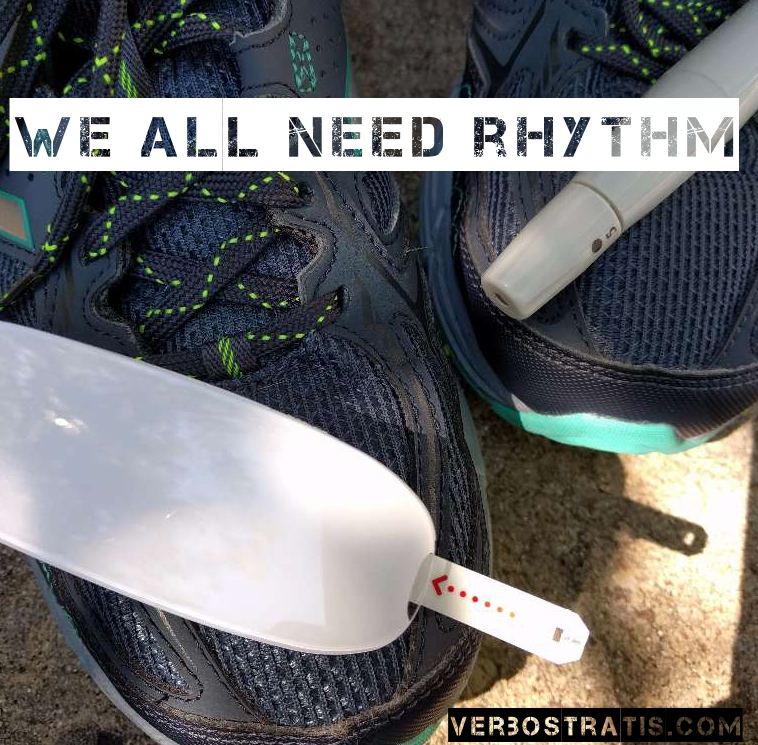
We All Need Rhythm

I have been working on another book, tentatively titled Dear Warriors, as a guided journal for those of us with type 1 diabetes. I wanted to post a rough draft of one piece to give readers a sense of the editing process. I remembered writing a blog post on a similar topic called Fast Enough to Get There and would love to hear your thoughts & suggestions. Does one speak more to you? Why?


Clockwork- Rhythm
I noted in a previous essay that I was glad to have more flexibility in handling the many facets of diabetes as was possible even 20 years ago. Now I’m going to make a testimony on the benefits of rhythm.
Sunrise, sunset. Hours tick by: tick tock tick. Sometimes we can get so frustrated with the speed or slowness of time that we lose sight of a simple fact:


We can use time to our advantage.
I started running in the summer of 2016. I started despite the activity itself. I didn’t like the idea, nor think it even possible to, run. Miles? You must be joking.
I began with a song that naturally stirred me to move (BigBang’s Seungri’s What Can I Do?). 3:40 of running? Don’t be absurd. Try 30 seconds. Then walk another 30. Repeat. And once more. Wow. I just ran for 1:30! I continued, walking, in celebration for the rest of the trail.

The next time, I had a 5-song playlist. I told myself to just walk and feel the rhythm. With the help of an app, I was cajoled to pick up the pace and really follow that music’s beat with my whole body. I sang along in my head. I sang aloud to the sky. OK, actually, I gasped. I matched my feet, breath and arms to the cadence pumping into my ears. Time finally started to pass.
I’m not telling you to run. I’m giving you a reminder that anyone, even me, can find a rhythm. Something that works for you. My beat is not your beat. It can cover anything in your day: when you eat, how you eat, when you sleep, when you move.


You decide. Again and again.

Chances are, you may have to tweak your rhythm as you discover what really excites and drives you. That’s another gift of embracing rhythm: you quickly see what works and does not for you. You get the opportunity of filling your days more and more with what matters most to you. All because you follow a rhythm and embrace its magic.